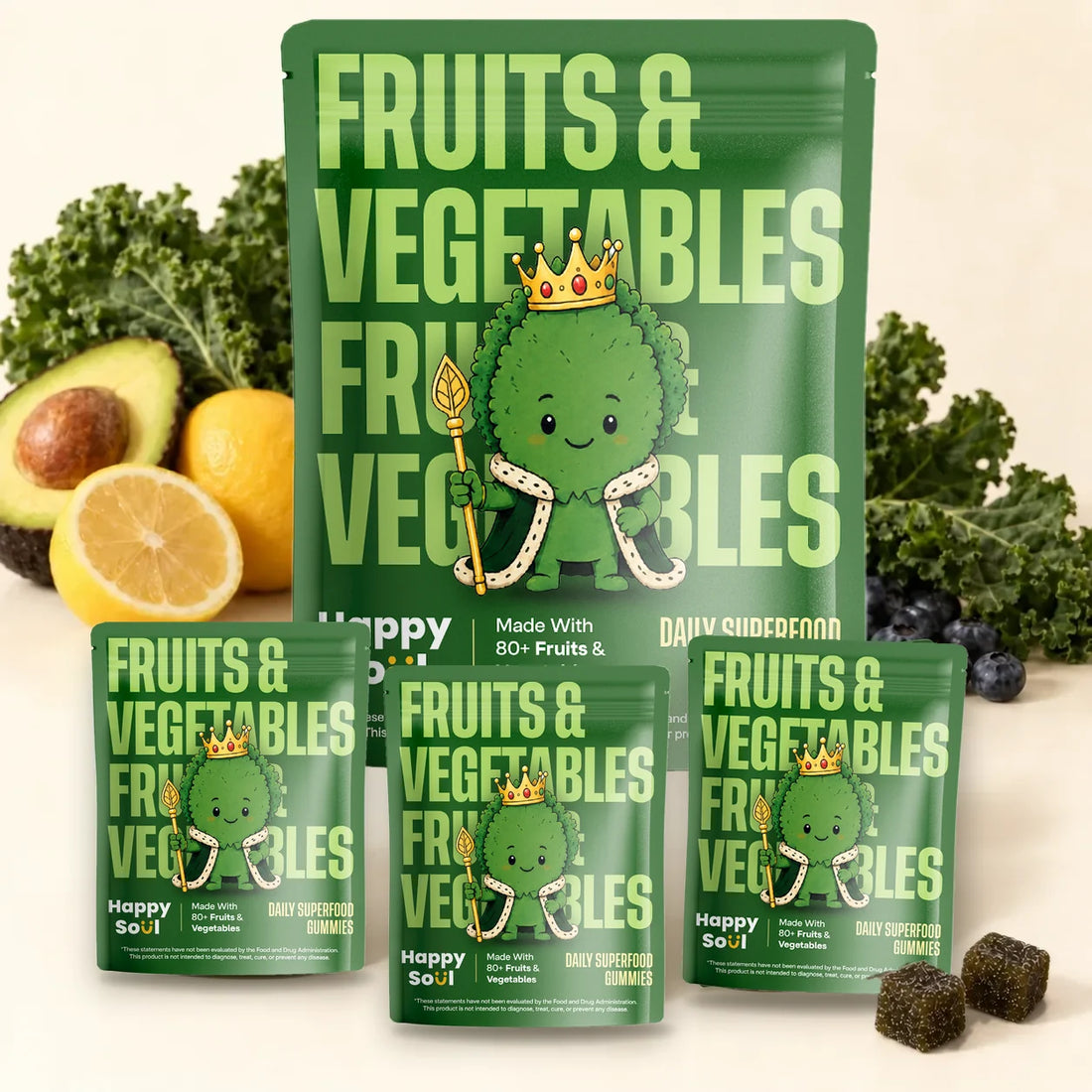
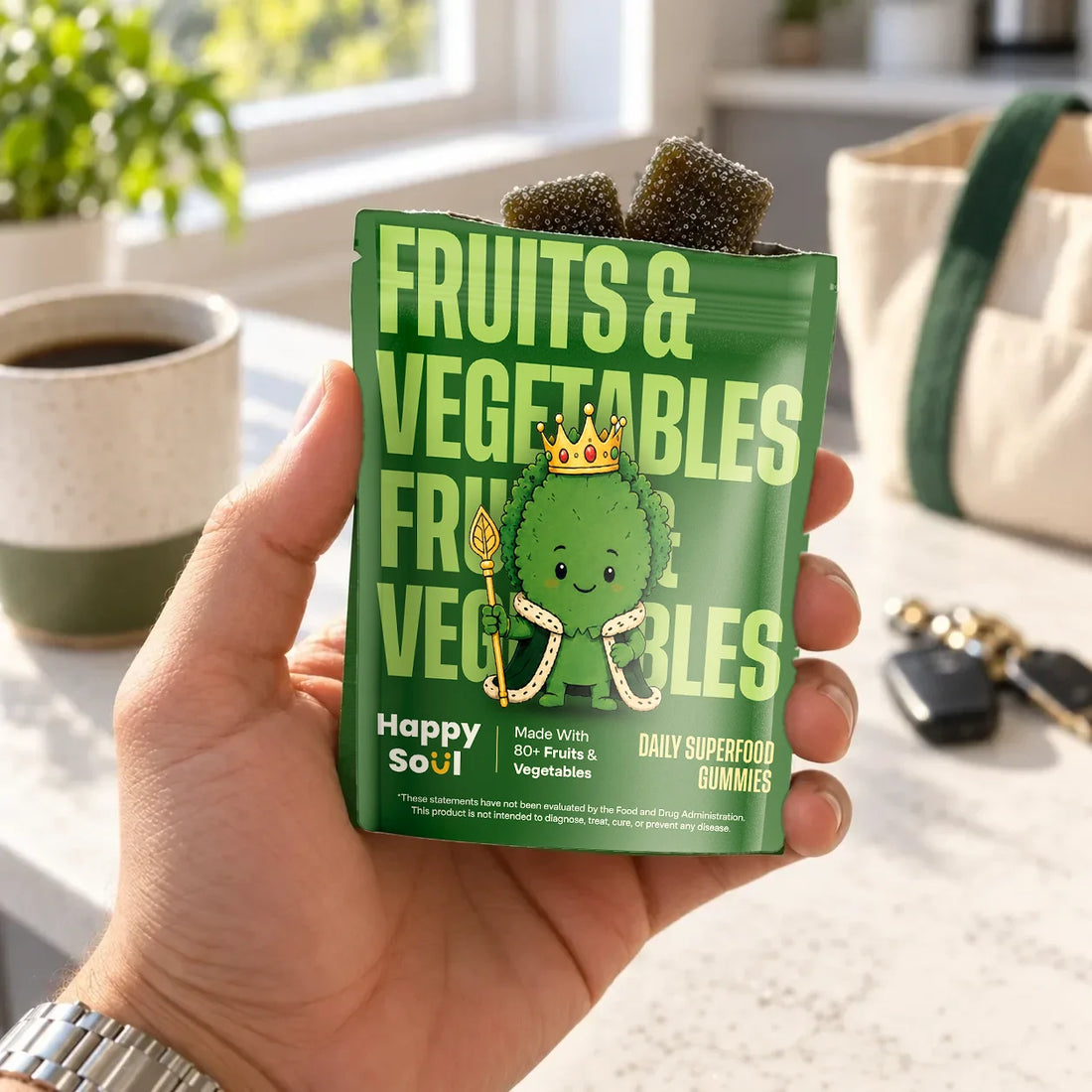
✓400mg plant blend✓83 whole plants✓Vegan Friendly certified

Every serving is packed with

46FruitsMango to mangosteen
21VegetablesBeet to broccoli sprouts
16Greens & algaeKale to spirulina

Daily Fruits & Veggies Gummies

Kale yeah, you got this.

1. Choose how you buy

2. Choose your size

Subscribers ship freeMade in North CarolinaSecure checkout
30single-serve packs
2gummies each
1a day
Daily Fruits & Veggies Gummies
Subscribe One-time

400mg of plants.Every. Single. Serving.

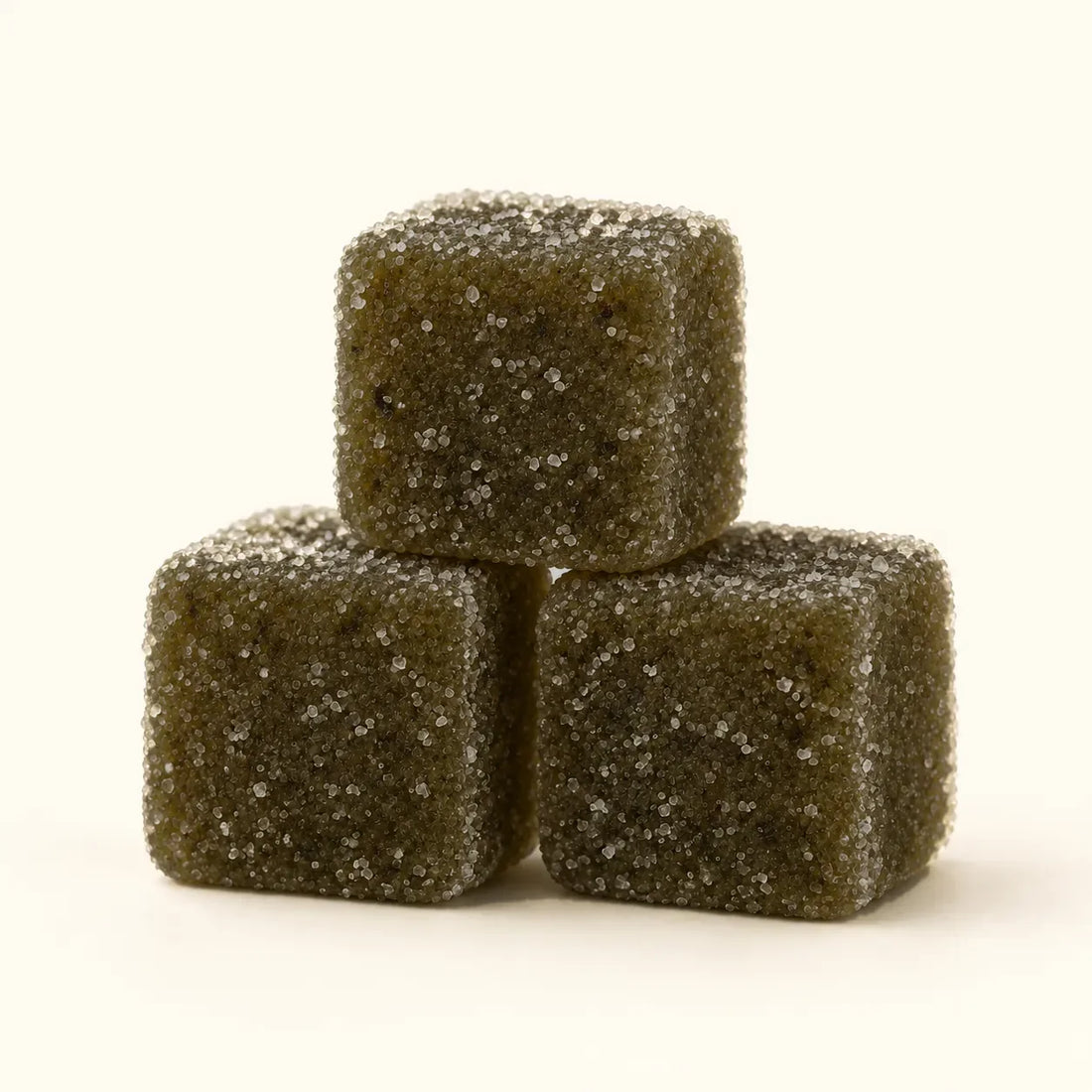
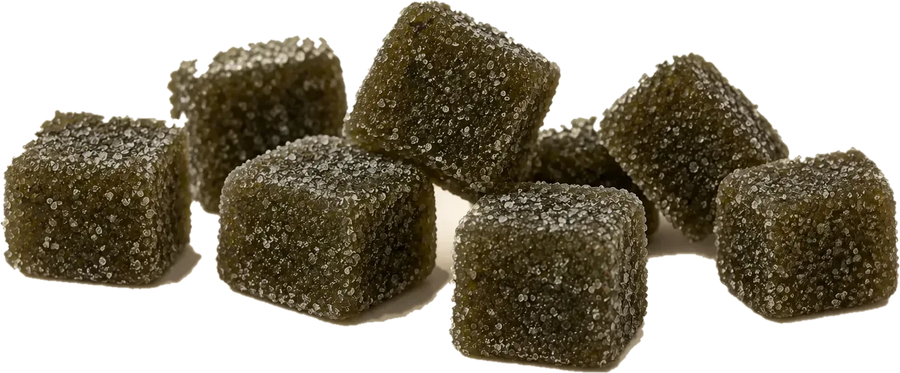
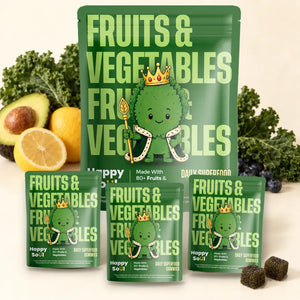
That deep olive color? That's the plants. A 400mg blend of 83 fruits, vegetables, greens and algae in every daily pack. No dyes, no corn syrup, sweetened with organic cane sugar.

Tear. Chew. Go.

What it isFrom blueberry, mango and pomegranate to rare finds like mangosteen, longan and soursop.
What’s in it for youFruit brings the color range: anthocyanins from berries and grape, carotenoids from mango and papaya, and bright citrus from yuzu to acerola. It is the fruit bowl you would never buy in one trip.

What it isRoots, crucifers and alliums, from beet and carrot to broccoli sprouts, garlic and ginger.
What’s in it for youVegetables bring what fruit can’t: glucosinolates from broccoli sprouts and other crucifers, the sulfur compounds in garlic, and betalains from beet. The vegetable drawer, minus the wilting.

What it isLeafy greens, young grasses and algae: kale, spinach, wheatgrass, spirulina and chlorella.
What’s in it for youGreens and algae finish the spectrum with chlorophyll, lutein from spinach and kale, and the blue-green pigments of spirulina. The greens most of us skip, in a chew you will not.

= 83 plants in every daily pack
Tap any group to learn more
83Plants in every servingTap a group to see every plant. Tap a plant to see why it's in there.
Every plant, explained83

What each fruit, vegetable and green in our blend is known for, and why we chose it. The blend is a measured part of every serving, so think of it as daily plant variety, not a stand-in for the vegetables on your plate.

Fruits 46

Tropical

Banana
Known forPotassium, vitamin B6 and, in less-ripe fruit, resistant starch.Why we use itThe world’s most-eaten fruit brings a starchy, mineral-forward profile that balances the juicy, acidic fruits around it.
Mango
Known forMangiferin, a polyphenol found in very few foods, plus beta-carotene and vitamin C.Why we use itMango is one of the only everyday sources of mangiferin, a compound almost no other fruit can add.
Pineapple
Known forBromelain, the enzyme found in its fruit and stem, plus vitamin C and manganese.Why we use itOne of three enzyme fruits we use, with papaya and kiwi, each carrying a different natural enzyme.
Papaya
Known forPapain, a natural fruit enzyme, and beta-cryptoxanthin, an orange-red carotenoid.Why we use itIts carotenoid mix differs from carrot and mango, widening the range of orange plant pigments.
Guava
Known forVitamin C, dietary fiber and, in pink guava, lycopene.Why we use itFew fruits carry lycopene. Pink guava does, joining tomato and watermelon as a red carotenoid source.
Passion Fruit
Known forPiceatannol, a polyphenol closely related to resveratrol, plus vitamins A and C.Why we use itA tropical source of stilbenes, a compound family most people only connect with grapes.
Coconut
Known forMedium-chain fats in its flesh and electrolytes like potassium in its water.Why we use itThe only fruit we use with a meaningful natural fat profile, unlike any berry or citrus.
Watermelon
Known forLycopene and L-citrulline, an amino acid named after the melon itself (Citrullus).Why we use itAdds citrulline, an amino acid concentrated in melons, plus another red carotenoid source.
Cantaloupe
Known forBeta-carotene, vitamin C and potassium in its orange flesh.Why we use itAn orange-fleshed melon that brings carotenoids from a fruit instead of a root vegetable.
Dragon Fruit
Known forBetalains in red-fleshed varieties, plus fiber and magnesium.Why we use itOne of the few fruits colored by betalains, the same red pigment family that colors beetroot.
Kiwi
Known forActinidin, a rare fruit enzyme, plus vitamins C, E and K.Why we use itGram for gram one of the most vitamin C-dense common fruits, with an enzyme found almost nowhere else.
Persimmon
Known forCondensed tannins, beta-cryptoxanthin and manganese.Why we use itAn Asian orchard fruit whose tannin profile is unlike any berry’s.
Star Fruit
Known forEpicatechin and other flavonoids, plus vitamin C.Why we use itCarambola from Southeast Asia, a fruit most Americans rarely eat, adding new flavonoid variety.
Jackfruit
Known forCarotenoids, flavonoids and fiber from the largest tree fruit on earth.Why we use itA staple across South and Southeast Asia that brings tropical carotenoids from outside the usual grocery list.
Lychee
Known forOligomeric procyanidins, concentrated in its skin, plus vitamin C.Why we use itA Chinese heritage fruit that adds procyanidins from outside the berry family.
Longan
Known forGallic acid, ellagic acid and vitamin C.Why we use itLychee’s cousin, prized in Southeast Asian kitchens, with its own phenolic acid profile.
Mangosteen
Known forXanthones, a polyphenol family found mainly in its purple rind.Why we use itThe best-known food source of xanthones, a compound family no other plant here provides.
Soursop
Known forPhenolic acids, vitamin C and a creamy, sweet-tart pulp.Why we use itAlso called guanábana, a Caribbean and Latin American favorite that rounds out the tropical group.

Berries

Blueberry
Known forAnthocyanins, the blue-purple pigments in its skin, plus vitamin K and manganese.Why we use itThe best-known blue food, covering the blue end of the plant color spectrum.
Strawberry
Known forEllagitannins, vitamin C and fisetin, a flavonoid strawberries carry more of than almost any other food.Why we use itAmerica’s favorite berry and the top common food source of fisetin.
Raspberry
Known forEllagitannins, anthocyanins and dietary fiber.Why we use itOne of the highest-fiber fruits per serving, with ellagitannins similar to pomegranate’s.
Cranberry
Known forA-type proanthocyanidins (PACs), a tannin structure rare among fruits.Why we use itIts A-type PACs are built differently from the tannins in every other berry.
Cherry
Known forCyanidin anthocyanins in its dark red skin, plus potassium and vitamin C.Why we use itThe sweet counterpart to tart cherry, broadening the cherry polyphenol profile.
Tart Cherry
Known forAnthocyanins and other polyphenols in its sour red flesh.Why we use itAmerica’s classic sour cherry, grown largely in Michigan orchards, included here as whole fruit.
Elderberry
Known forCyanidin-3-sambubioside, one of the darkest berry anthocyanins.Why we use itA European folk-tradition berry that adds the deepest purple pigment we use.
Black Currant
Known forDelphinidin anthocyanins and vitamin C.Why we use itA British and Scandinavian staple whose anthocyanins differ from blueberry’s and cherry’s.
Mulberry
Known forAnthocyanins, resveratrol and iron.Why we use itA tree berry used for centuries in Asia and the Middle East, with a profile distinct from bush berries.
Amla
Known forEmblicanin tannins, gallic acid and vitamin C.Why we use itIndian gooseberry, a cornerstone of Ayurvedic food traditions for more than two thousand years.
Pineberry
Known forEllagitannins in a white heirloom strawberry with pineapple notes.Why we use itA rare heirloom variety most people have never tasted.
Acerola
Known forOne of the most concentrated natural sources of vitamin C on earth.Why we use itVitamin C from a whole cherry-like fruit grown in the Caribbean and Brazil.

Orchard

Apple
Known forQuercetin in the skin, chlorogenic acid and pectin, the soluble fruit fiber.Why we use itApples are a classic source of pectin, the same kind of fruit fiber that sets every Happy Soul gummy instead of gelatin.
Pear
Known forFiber, chlorogenic acid and arbutin, a compound found mainly in pears and a few wild plants.Why we use itPears bring arbutin, a phenolic compound almost no other fruit contains.
Peach
Known forChlorogenic acid, carotenoids and vitamin C.Why we use itA Southern orchard classic that adds stone-fruit polyphenols and soft yellow carotenoids.
Plum
Known forNeochlorogenic and chlorogenic acids, plus anthocyanins in its purple skin.Why we use itPurple pigment from the orchard instead of the berry patch.
Apricot
Known forBeta-carotene and potassium.Why we use itOrange carotenoids from a stone fruit, complementing carrot and sweet potato.
Fig
Known forFiber, calcium, potassium and polyphenols concentrated in its dark skin.Why we use itOne of the oldest cultivated fruits and one of the few fruits with notable calcium.
Prune
Known forFiber, sorbitol, vitamin K and neochlorogenic acid.Why we use itDrying the plum concentrates its compounds, so prune adds a denser take on plum’s profile.
Nectarine
Known forCarotenoids, phenolic acids and vitamin C.Why we use itThe smooth-skinned peach, adding more stone-fruit range.
Grape
Known forResveratrol in the skin and proanthocyanidins in the seed.Why we use itWhole-grape polyphenols, skin to seed, the compound family that made red grapes famous.
Pomegranate
Known forPunicalagins and ellagic acid, compounds found in very few foods.Why we use itPomegranate’s punicalagins are nearly unique in the plant world.

Citrus

Orange
Known forHesperidin, vitamin C and folate.Why we use itThe world’s most-loved citrus and the main dietary source of hesperidin.
Tangerine
Known forNobiletin and tangeretin, flavones concentrated in the peel.Why we use itAdds polymethoxyflavones, a compound class found almost only in citrus peel.
Lemon
Known forEriocitrin, limonene and vitamin C.Why we use itLemons carry more eriocitrin than other citrus, a flavanone of their own.
Lime
Known forLimonoids and vitamin C.Why we use itA Latin American and Caribbean kitchen staple that adds limonoids, a citrus-only compound family.
Grapefruit
Known forNaringin, the flavanone behind its bitterness, plus lycopene in pink and red varieties.Why we use itIts naringin is a flavanone other citrus barely carry.
Yuzu
Known forAromatic citrus oils, hesperidin and vitamin C.Why we use itA prized Japanese citrus that rounds out the group with a rare variety.

Vegetables 21

Roots & Bulbs

Beet
Known forBetalains and naturally occurring dietary nitrates in the deep red root.Why we use itThe root behind beet’s signature color, used here alongside beet greens, root to leaf.
Carrot
Known forAlpha- and beta-carotene, the orange pigments named after the carrot, plus vitamin K.Why we use itThe classic carotene source and the namesake of the whole carotenoid family.
Sweet Potato
Known forBeta-carotene, potassium and fiber in its orange flesh.Why we use itA Southern staple. North Carolina, home of our kitchen, grows more sweet potatoes than any other state.
Radish
Known forGlucoraphenin, the glucosinolate behind its peppery bite, plus vitamin C.Why we use itA crunchy cruciferous root that brings cabbage-family chemistry from below ground.
Turnip
Known forGlucosinolates, vitamin C and fiber.Why we use itA cruciferous root that extends glucosinolate sources beyond leafy greens.
Rutabaga
Known forGlucosinolates, vitamin C and potassium.Why we use itA turnip and cabbage cross with its own sulfur-compound profile.
Garlic
Known forAlliin, which becomes allicin when crushed, and other organosulfur compounds.Why we use itAlliums carry sulfur compounds found in no other plant family.
Onion
Known forQuercetin, from one of its top dietary sources, plus organosulfur compounds.Why we use itThe most-eaten allium and a leading food source of quercetin.
Leek
Known forKaempferol, inulin-type fiber and vitamin K.Why we use itA milder allium whose signature flavonoid is kaempferol instead of quercetin.
Ginger
Known forGingerols and shogaols, the pungent compounds unique to ginger.Why we use itA rhizome used in kitchens worldwide, with a compound family found nowhere else.

Garden

Celery
Known forApigenin, luteolin and naturally occurring nitrates.Why we use itA crisp stalk that adds apigenin, a flavone few vegetables carry.
Cucumber
Known forCucurbitacins and vitamin K, with a very high water content.Why we use itThe gourd family brings its own chemistry, distinct from roots and leaves.
Green Bean
Known forChlorophyll, kaempferol, quercetin and fiber.Why we use itA green pod vegetable that widens flavonoid variety beyond leaves.
Green Bell Pepper
Known forVitamin C and luteolin.Why we use itAdds luteolin, a flavonoid less common than quercetin in everyday diets.
Pea
Known forPlant protein, saponins and fiber.Why we use itA legume that brings plant protein and saponins, a profile no fruit provides.
Tomato
Known forLycopene, the red carotenoid tomatoes are famous for, plus vitamin C.Why we use itThe most-eaten lycopene source in the American diet.

Cruciferous

Broccoli
Known forGlucoraphanin, the precursor to sulforaphane, plus vitamins C and K.Why we use itThe most familiar cruciferous vegetable and the backbone of the group.
Broccoli Sprouts
Known forGlucoraphanin at many times the concentration found in mature broccoli.Why we use itYoung broccoli sprouts are the most concentrated food source of glucoraphanin.
Brussels Sprouts
Known forSinigrin, a glucosinolate, plus vitamins K and C.Why we use itBrings a different glucosinolate than broccoli.
Cauliflower
Known forGlucosinolates, choline and vitamin C.Why we use itA mild cruciferous vegetable with a choline profile of its own.
Cabbage
Known forGlucosinolates, vitamin C and, in red cabbage, anthocyanins.Why we use itOne of the oldest cultivated vegetables, eaten fresh and fermented on every continent.

Greens 16

Leafy

Kale
Known forLutein, zeaxanthin, vitamin K and glucosinolates.Why we use itThe best-known dark leafy green, carrying carotenoids and cabbage-family compounds in one leaf.
Spinach
Known forLutein, folate, magnesium and naturally occurring nitrates.Why we use itA dark leafy green with naturally occurring nitrates, a natural partner to beet.
Collard Greens
Known forGlucosinolates, calcium and vitamin K.Why we use itA Southern kitchen staple and one of the most calcium-dense leafy greens.
Swiss Chard
Known forBetalain-colored stems, magnesium and vitamin K.Why we use itChard is the same species as beet, grown for its leaves instead of its root.
Parsley
Known forApigenin, myricetin and vitamin K.Why we use itOne of the most concentrated food sources of apigenin.
Lettuce
Known forLactucin, vitamin K and naturally occurring nitrates.Why we use itThe world’s most-eaten salad green, with lactucin found almost only in lettuce and its relatives.
Arugula
Known forErucin, a glucosinolate breakdown product, and some of the highest nitrate levels of any vegetable.Why we use itA peppery Mediterranean green from the cabbage family.
Watercress
Known forPhenethyl isothiocyanate (PEITC) and vitamin K.Why we use itWatercress tops the CDC’s list of powerhouse fruits and vegetables for nutrient density.
Beet Greens
Known forLutein, vitamin K and nitrates in the beet’s own leaves.Why we use itThe tops of the beet plant, so beet is here root to leaf.

Grasses & Algae

Wheatgrass
Known forChlorophyll, vitamin K and minerals from young wheat leaves.Why we use itHarvested as young grass, before the grain forms.
Barley Grass
Known forSaponarin, a flavonoid characteristic of young barley leaves, plus chlorophyll.Why we use itA second cereal grass with a flavonoid wheatgrass doesn’t carry.
Alfalfa
Known forVitamin K, saponins and plant protein.Why we use itA legume leaf, joining pea as the second legume we use.
Moringa
Known forMoringin, quercetin and beta-carotene.Why we use itThe drumstick tree leaf, a staple across India and Africa, with an isothiocyanate of its own.
Spirulina
Known forPhycocyanin, the blue-green pigment, plus plant protein.Why we use itPhycocyanin is a blue pigment almost no other food carries.
Chlorella
Known forOne of the most chlorophyll-dense foods, plus plant protein.Why we use itA single-celled green alga that pairs with spirulina to cover green and blue-green algae.
Aloe
Known forAcemannan, a polysaccharide from the inner leaf gel.Why we use itA plant carbohydrate unlike any fruit fiber.

Every plant. Right on the label.

*These statements have not been evaluated by the Food and Drug Administration. This product is not intended to diagnose, treat, cure, or prevent any disease.

Don't takeour word for it.

  • 5 stars: 22 (81%)
  • 4 stars: 4 (15%)
  • 3 stars: 1 (4%)
  • 2 stars: 0 (0%)
  • 1 star: 0 (0%)
J
James W.
Works for me

Keep them at my desk. Take them after lunch. Haven’t felt the need to make it any more complicated than that.

D
Daniel
Don’t judge them by the color

Opened these and immediately showed my wife because they looked nothing like the gummies we usually buy. Definitely not bright little candy bears. She said “well you did order fruits AND vegetables” which, fair enough. I tried them before she did and actually really liked them. Then she wanted to try hers. We stood in the kitchen discussing gummy textures for longer than two adults probably should. Anyway, the appearance almost threw me off, but I’m glad it didn’t. The taste was a pleasant surprise and we both ended up happy with them.

N
Nick

Pleasantly surprised.

E
Erin B.
Happy with these

Still eating my actual fruits and vegetables, obviously. Just enjoying these alongside my usual food. They taste good and don’t feel like another task on the list.

E
Eric
My blender can have a day off

I already make enough things that involve scooping, blending and washing something afterward. Nice to have a gummy that requires absolutely none of that.

A
Alex

Finally, a gummy I like.

A
Alina

yummm

M
Michelle
Even my skeptical husband liked them

He made a face when I said “vegetable gummies.” Then tried them and asked where I ordered them from. so there’s that 😂

L
Laura
Something different

I’m usually pretty predictable with what I buy. Saw these, got curious, gave them a try. Glad I branched out for once.

K
Kevin
Softer than I expected

Thought they’d be a little firmer. Took a couple servings to get used to, but I like them now. Would get them again.

I
Isaac

Already reordered.

P
Priya S.
The chew is so good

I’m very particular about gummy texture. These have the kind of chew I enjoy, and that makes a bigger difference to me than fancy packaging or a clever name.

J
Jess
The little kale guy got me

Not gonna pretend the packaging didn’t influence this purchase lol. Luckily I like what’s inside too.

N
Nate

Solid.

B
Ben

good

T
Tori
Actually finished these

Usually I get bored halfway through a gummy purchase. Didn’t happen with these. Got to the end and was disappointed there weren’t more, which probably says enough

K
Kayla
Didn’t expect to like these this much

Bought them because I liked the idea. Figured the taste would be something I’d tolerate, but I actually enjoy them. nice surprise

M
Michael
Good, just a bit messy

I like the gummies themselves. The sugar coating leaves a few bits behind when I eat them at my desk. Not a huge deal, just something I noticed.

C
Chris T.
Like the idea more than the taste

They’re okay. Nothing unpleasant, just not a flavor I personally get excited about. I’ll finish what I bought.

R
Rachel

love

B
Brooke
They look different because they are different

You can see the little specks in them, which I actually like. Wasn’t looking for another neon gummy. Happy with the taste too

A
Andrew P.
Glad they’re not huge pills

That was honestly the main attraction for me. Turns out I also like eating them, so that’s a bonus.

N
Nina
My sister was right, unfortunately

My sister and I have a running disagreement about gummies. She loves them, I usually complain about the texture and end up buying capsules instead. She convinced me to try these and stood there waiting for my reaction, which was annoying because I liked them immediately. I tried not to give her the satisfaction but apparently my face gave it away. The chew works for me, and I enjoy the taste without feeling like I have to rush through it. Bought my own afterward. She has already reminded me twice that this was her recommendation.

J
Josh

These are staying.

M
Monique R.
A little sweet for me

Would prefer a little less sweetness, personally. Still like them, especially the texture. My husband thinks they taste great exactly as they are.

R
Renee
Would buy a bigger pack

Really enjoying these. My only request is a larger size because my partner keeps helping himself to mine.

S
Stephanie L.
Passed the forgotten-cabinet test

I have a kitchen cabinet full of things I was very enthusiastic about for approximately three days. My husband calls it the museum. So when these arrived he asked whether they were going straight into the collection. I left them beside the coffee instead and tried them the next morning. Liked them enough that remembering wasn’t really an issue after that. Not claiming I suddenly became the most organized person in the world, but I’ve actually kept taking these. He still asks how the museum is doing. These haven’t made it in there yet.

Supplement Facts

Serving Size 2 Gummies
Servings Per Container 30
Amount Per Serving % Daily Value
Calories 20
Sodium 10mg <1%*
Total Carbohydrate 5g 2%*
Total Sugars 4g †
Includes 4g Added Sugars 8%*
Fruit & Vegetable Blend 400 mg †
Kale (leaf), Spinach (leaf), Collard Greens (leaf), Swiss Chard (leaf), Parsley (leaf), Lettuce (leaf), Arugula (leaf), Watercress (leaf), Beet (root), Beet Greens (leaf), Carrot (root), Sweet Potato (root), Radish (root), Turnip (root), Rutabaga (root), Broccoli (flower head), Broccoli Sprouts (sprout), Brussels Sprouts (bud), Cauliflower (flower head), Cabbage (leaf), Garlic (bulb), Onion (bulb), Leek (stalk), Ginger (rhizome), Celery (stalk), Cucumber (fruit), Green Bean (pod), Green Bell Pepper (fruit), Pea (seed), Wheatgrass (young grass), Barley Grass (young grass), Alfalfa (leaf), Moringa (leaf), Spirulina (whole algae), Chlorella (whole algae), Blueberry (fruit), Strawberry (fruit), Raspberry (fruit), Cranberry (fruit), Cherry (fruit), Tart Cherry (fruit), Elderberry (fruit), Black Currant (fruit), Mulberry (fruit), Amla (fruit), Apple (fruit), Pear (fruit), Peach (fruit), Plum (fruit), Apricot (fruit), Fig (fruit), Prune (fruit), Orange (fruit), Tangerine (fruit), Lemon (fruit), Lime (fruit), Grapefruit (fruit), Yuzu (fruit), Banana (fruit), Mango (fruit), Pineapple (fruit), Papaya (fruit), Guava (fruit), Passion Fruit (fruit), Coconut (fruit), Watermelon (fruit), Cantaloupe (fruit), Grape (fruit), Pomegranate (fruit), Dragon Fruit (fruit), Kiwi (fruit), Persimmon (fruit), Star Fruit (fruit), Jackfruit (fruit), Lychee (fruit), Longan (fruit), Mangosteen (fruit), Soursop (fruit), Pineberry (fruit), Tomato (fruit), Acerola (fruit), Nectarine (fruit), Aloe (leaf).
* Percent Daily Values are based on a 2,000 calorie diet.
† Daily Value not established.

Other Ingredients

Organic Cane Sugar, Water, Organic Tapioca Syrup, Isomalt, Glycerin, Pectin, Organic Flavoring, Malic Acid, Citric Acid, Sodium Citrate, Medium Chain Triglycerides (MCT), Sunflower Lecithin.
Allergen Information:
Contains no major allergens.
No artificial colors✦No artificial flavors✦No synthetic dyes✦No corn syrup✦No artificial colors✦No artificial flavors✦No synthetic dyes✦No corn syrup✦No artificial colors✦No artificial flavors✦No synthetic dyes✦No corn syrup✦No artificial colors✦No artificial flavors✦No synthetic dyes✦No corn syrup✦
Why
83 plants?

Most of us eat the same handful of plants every week. Variety is the hard part, so every serving packs a 400mg blend from 83 different fruits, vegetables, greens and algae.

Rd

Reds & purples

Berries, cherries, pomegranate and grape, colored by anthocyanins.

Or

Oranges & yellows

Mango, carrot, citrus and sweet potato, naturally rich in carotenoids.

Gn

Greens

Kale, spinach and broccoli sprouts, the leafy and cruciferous crowd.

Al

Algae

Spirulina and chlorella, two greens most kitchens never see.

*Plants in our Fruit & Vegetable Blend. See the Supplement Facts panel for the full list and amounts per serving. These statements have not been evaluated by the FDA. This product is not intended to diagnose, treat, cure, or prevent any disease.

The Happy Soul Club

50% off your first box. Get spoiled.

Your first box is half off, and every delivery after saves 25%. Stick around and the rewards get sweeter, starting with your very first box.

50% off your first box, 25% afterFree shippingSkip, pause or cancel anytime
  1. Order 1

    Taste the lineup

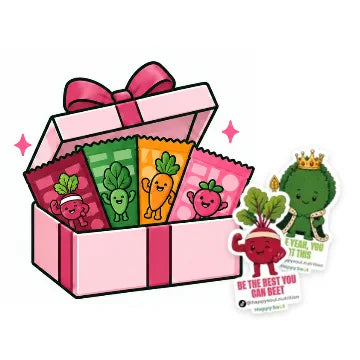
    A single-serve pack of every Happy Soul flavor plus our sticker pack, free in your first box.

  2. Month 3

    Merch drop

    A Happy Soul smiley tote, on us.

  3. Month 6

    Hydro Flask

    Your own smiley Hydro Flask. Tear, chew, sip, go.

  4. Best reward

    Month 12

    Hoodie + VIP invite

    The smiley hoodie, plus a gold VIP ticket for two to our next member event.

Subscriptions renew automatically at the selected frequency until you cancel. Rewards ship with your 3rd, 6th and 12th paid subscription orders while supplies last. First-order sample packs are single-serve. VIP tickets admit two and are subject to event availability.

Miami, FLWhere it all started
Lexington, NCOur new 14,000 sq ft kitchen

Our story

Born in Miami.Made by us since 2018.

We've been making gummies since 2018, and we just moved into a bigger facility in Lexington, North Carolina. More space means more Happy Soul, made by the same team with the same recipes.

cGMPMade in our
own facility
VeganPlant-based,
no gelatin
Gluten-freeLab tested
gluten-free
Lab testedThird-party
verified

Come as you are

Happy souls move together.

Happy Soul community members grabbing pouches after a morning event

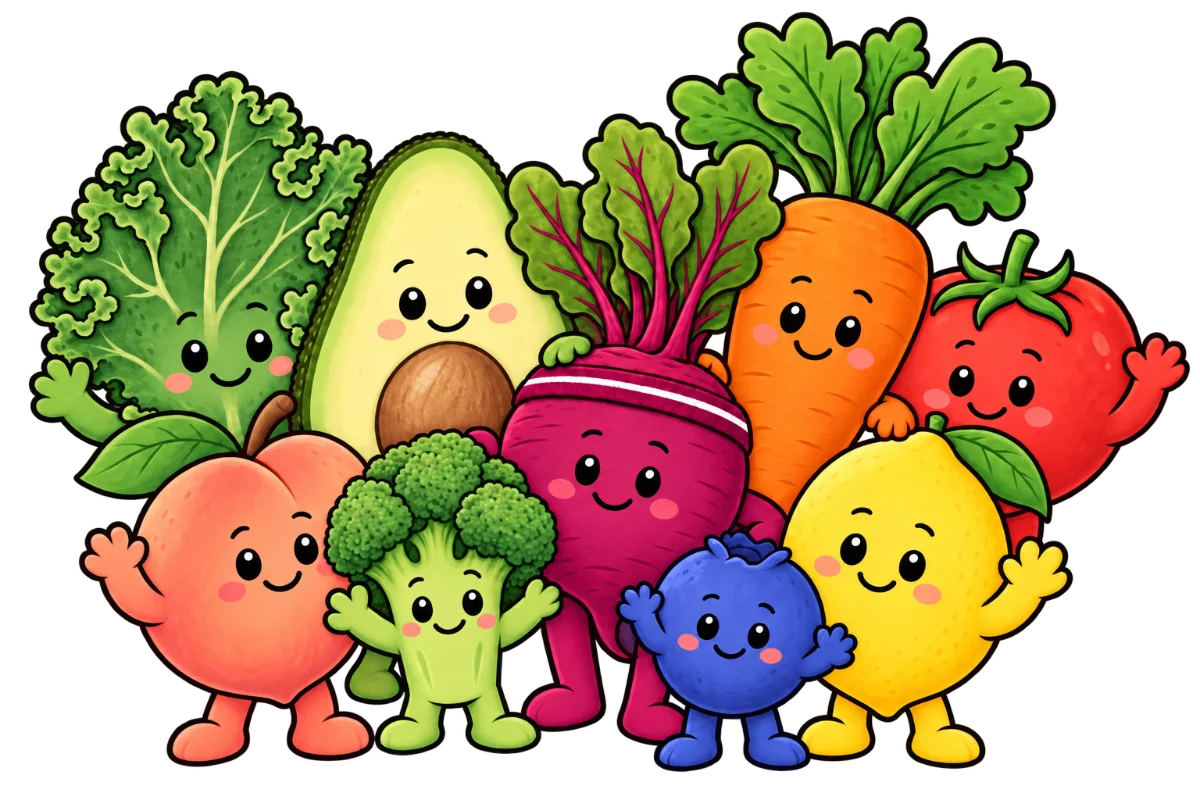
The Happy Soul characters huddled together for a group photo

Team Happy Soul

Happy Soul is based in Miami, but our events travel. We bring the community together in cities everywhere for community yoga, sunset walks and morning dance parties. No membership, no pressure, and a basket of pouches waiting at the finish.

  • Community yoga
  • Sunset walks
  • Dance parties

Get the next invite

One email when the next event drops. That’s it.

Event invites from Happy Soul. Unsubscribe anytime.

Vegan Friendly

100% plant-based.
Certified vegan.

Most gummies are set with gelatin, which comes from animals. Ours are set with pectin from fruit, so every cube is plant-based from the base up, and independently certified vegan.Certified by Vegan Friendly

  • Pectin, never gelatin
  • No animal ingredients
  • Lab-tested gluten-free

We know we're better.

Happy Soul
Other greens gummies
More active ingredients per serving
✓
✕
Organic cane sugar
✓
✕
Organic tapioca syrup, no corn syrup
✓
✕
Organic flavors
✓
✕
30 single-serve daily packets
✓
✕
Made in our own facility
✓
✕
50% off your first subscription order
✓
✕

Better together

Build a bundle.

Extra-Strength Fruits & Vegetables Gummies pouchDaily Beet Gummies pouch+

Plants & Beet

Be the best you can beet. 1,000mg beetroot + juice, no juicer.

$59.98
Extra-Strength Fruits & Vegetables Gummies pouchNootropic Mushroom Gummies pouch+

Plants & Mushrooms

The world needs mush more of you. Lion's Mane, Reishi, Turkey Tail and Chaga.

$64.98
Extra-Strength Fruits & Vegetables Gummies pouchCollagen + Whey Gummies pouch+

Plants & Protein

Your life's about to get whey better. Collagen + whey. Contains milk.

$59.98

Questions? Ask a human.

Ingredients, shipping, subscriptions or anything else. A real person on our team will answer.


@happysoul.nutrition
Happy Soul

Real plants, made in our own kitchen in Lexington, North Carolina.

Our kitchen

Happy Soul Nutrition
4058 Old US Highway 52
Lexington, NC 27295

*These statements have not been evaluated by the Food and Drug Administration. These products are not intended to diagnose, treat, cure or prevent any disease. Made in our cGMP-compliant facility.

© 2026 Happy SoulPowered by Shopify

Frequently Asked Questions

The plant questions you actually want answered.

Two gummies once a day. One single-serve packet is one full serving, so grab a packet and you're done.

46 fruits, 21 vegetables and 16 greens and algae, from blueberry and kale to mangosteen and spirulina. 400mg in every two-gummy serving.

That's the plants. Our 83-plant blend makes a dense, olive-dark chew. No dyes, no artificial colors.

Yes. Every gummy carries the full blend, 400mg across a two-gummy serving.

No. Keep the produce on your plate. These are for the days your plate could use a little backup.

Nothing to scoop, shake or choke down. Two gummies and 83 plants in a single-serve packet you can keep in your bag.

No. The Supplement Facts list our 400mg plant blend, not added vitamins. You're getting plant variety, not a multivitamin.

Yes. Fruits & Veggies Gummies are Vegan Friendly certified and set with fruit pectin, never gelatin.

In our own cGMP facility in Lexington, North Carolina. Happy Soul is Miami-born, and we've been making gummies since 2018.

Yes. Our gummies go through full-panel third-party lab testing, and every batch is made by our own team in Lexington, NC.

30 single-serve packets with two gummies each. That's 60 gummies, or 30 days of one packet a day.

50% off your first order, then 25% off every delivery after. Each pouch is 30 daily servings, and you can skip, pause or cancel anytime.

No FAQs found matching your search.

Learn More About The World Of Whole Plant Nutrition